Horror Stories — Be the One Walking Down the Hallway
2026-08-12 · PLOT Team
Why Horror Stories Work
Horror runs on one asymmetry: you know something's wrong before the story lets you understand why. A sound where there shouldn't be one. A hallway that's one degree colder than it should be. The pleasure isn't the jump scare itself — it's the stretch of not-knowing right before it, and the dread of being the one who has to decide what to do about it.
Reading horror, someone else makes that call — open the door or don't, check the noise or pretend you didn't hear it. You watch, and either agree with their choice or want to shout at the page. Playing it, there's no page to shout at. The decision is yours, and so is whatever answers it.
What Changes When You Step In
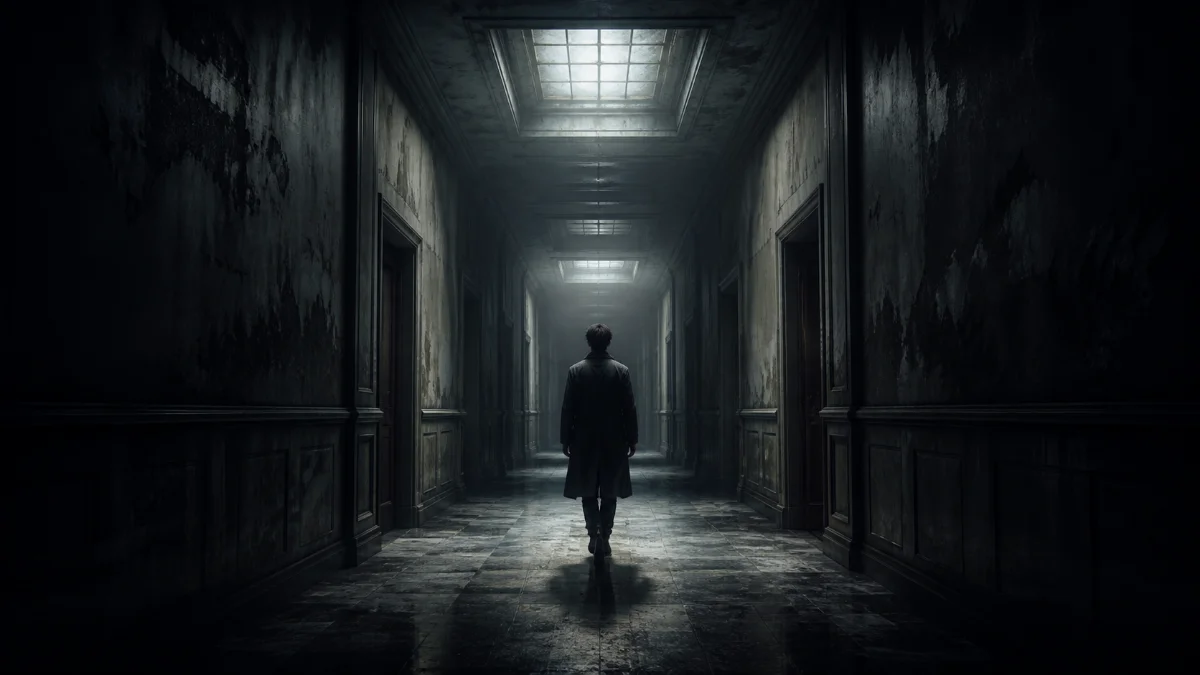
When an AI writes the story around what you do, you're the one holding the flashlight. Check the camera or don't, answer the knock or stay quiet, go back for what you dropped or leave it — every choice is yours, and the story remembers which one you made.
Something like this is enough to start:
- Genre: Horror / Keywords: haunted, isolation, something in the dark
- Setup: First night as the night guard at a closed-down school. The third-floor hallway camera runs three minutes behind everywhere else in the building. Just now, on that screen, someone waved.
Type a setup like that, or open a ready-made horror scenario, and PLOT writes the opening scene from there.
Going Long Takes Memory
Horror pays off on delay. The detail you noticed in scene two — the name scratched into the doorframe, the exact number of times the footsteps stopped — has to still be there when it matters in scene twenty, or the dread never cashes out.
PLOT keeps managing what's been planted as the story runs, so a detail from early on can still resurface pages later, right when it's supposed to. There's a fuller account of how that works in AI That Doesn't Forget — Narrative Memory for Long Stories.
In Short
Horror's engine is what you don't know yet — and reading someone else find out only gets you halfway there. Step in, hold the flashlight yourself, and decide what happens when something waves back.
Walk the hallway you keep reading about — start here.
Frequently Asked Questions
-
What are horror stories?
Stories built on the unknown — something's wrong, something's watching, and the tension doesn't let up. You're not reading about someone finding out; you're the one finding out.
-
Does the tension carry forward, or does it reset each turn?
It carries forward. What you noticed three turns ago — the sound, the missing door, the thing in the corner — still matters when it comes back.
-
Do my choices actually affect whether I survive?
Yes. Checking the noise or ignoring it, locking the door or opening it — the story tracks what you did and builds the consequence from there.
-
Can I dial it back if it gets too intense?
Yes. You set the premise, so you control how graphic or restrained it gets — a slow-burn haunting or something sharper, your call.
Related
Solo TTRPG — AI Takes the GM Seat · Apps for When You're Bored — A Way Into a Story · AI That Doesn't Forget — Narrative Memory for Long Stories